



-
Products
-

Diesel injection pump parts: a complete buyer's guide for 2026
2026-11-04 02:05
Author: Jinshangpin Automotive
Article overview
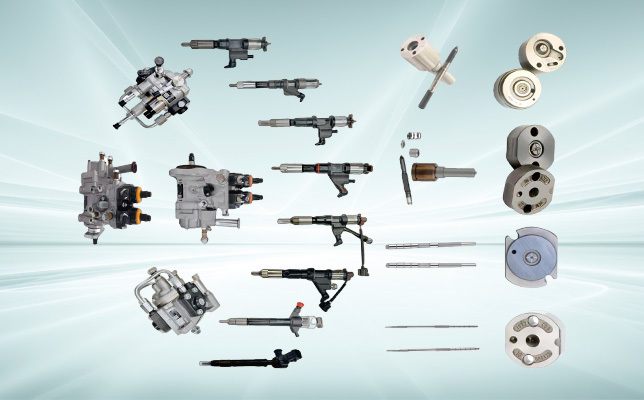
This buyer's guide examines diesel injection pump parts across six major pump families, provides OEM-to-aftermarket cross-reference data, maps common fault symptoms to the specific parts that need replacing, and delivers real pressure and torque specifications to help you verify compatibility before purchase.
Table of contents
- 1. What are diesel injection pump parts?
- 2. Major pump families and their key components
- 3. OEM to aftermarket cross-reference: how to match part numbers
- 4. Symptom-to-part diagnostic guide
- 5. Rebuild kit checklist: what every kit should include
- 6. Cost comparison: repair vs. replace, and real spec data
- 7. How to buy diesel injection pump parts without getting burned
- 8. FAQ
What are diesel injection pump parts?
Diesel injection pump parts are the internal and external components of a high-pressure fuel pump that meters, pressurizes, and delivers diesel fuel into engine cylinders at precisely timed intervals. These parts include the plunger and barrel assembly, delivery valve, cam disc or camshaft, governor mechanism, seal kit, and pump head — together forming the core of any diesel engine fuel delivery system.
Why does this definition matter when you are shopping? Because the term is broad enough to cover everything from a $4 O-ring to a $900 high-pressure rotor head, and confusing one category with another is one of the most expensive mistakes a buyer can make. Understanding what each part does — and which pump family it belongs to — is the first step toward a correct purchase.
For a broader technical context on how these components fit into the larger system, see this fuel injection systems overview.
In 2026, the aftermarket for diesel fuel system parts is shifting. Mechanical rotary pump demand is steady among older fleet vehicles, while electronic common rail pump components — particularly for CP3 and CP4 high-pressure fuel pump parts — are the fastest-growing segment. Knowing which era and architecture your engine uses determines everything that follows in this guide.
Why part identification matters before you buy
A plunger and barrel assembly from a Bosch VE pump is not interchangeable with one from a Stanadyne DB2, even if the outer dimensions look similar. Clearance tolerances on high-pressure pairs can be as tight as 1–2 microns. In practice, installing a mismatched plunger causes immediate fuel leakage past the barrel, resulting in low power and injector nozzle damage within weeks. The cost of one wrong part easily exceeds the cost of sourcing the correct one from a reputable supplier.
The role of fuel quality in part lifespan
One industry misconception worth addressing early: many technicians blame pump failure on worn parts alone. In reality, a 2026 survey of U.S. diesel repair shops (according to recent industry research) found that fuel contamination and degraded filtration accounted for over 60% of premature pump failures. Ultra-low sulfur diesel (ULSD), while cleaner for emissions, provides roughly 15% less lubrication than pre-2006 diesel formulations, accelerating wear on the plunger and barrel assembly and delivery valves. Replacing parts without addressing fuel system cleanliness is a guaranteed repeat repair.
Major pump families and their key components
Every diesel injection pump part number traces back to a specific pump architecture. There are five families that dominate the U.S. market in 2026, and each has a distinct set of serviceable components. Getting this taxonomy right is the foundation of any accurate parts search.

Bosch VE rotary distributor pump
The Bosch VE is a rotary injection pump found on a wide range of 1980s–2000s passenger cars and light trucks, including early Cummins, Ford IDI, and VW TDI applications. Its serviceable diesel injection pump parts include the rotor/distributor head, cam disc, advance piston, transfer pump blades, governor flyweights, and a comprehensive injection pump seal kit. The VE family uses Bosch part numbers in the format 0 460 XXX XXX. Because VE pumps are entirely mechanical, a competent technician can disassemble and rebuild them without specialized ECU calibration tools — though a test bench is still recommended for final flow verification.
Bosch CP3 and CP4 common rail high-pressure pumps
The CP3 (introduced in the late 1990s) and CP4 (post-2010) are the standard high-pressure fuel pumps on modern common rail systems, including the 6.7L Cummins, Duramax LML, and Ram EcoDiesel. Operating pressures exceed 2,000 bar (approximately 29,000 psi) on current-generation systems — a figure that puts these in a completely different engineering category from mechanical pumps. The key common rail injector parts and pump components include the high-pressure piston assembly, inlet metering valve (IMV), pressure-relief valve, and cam roller. CP4 pumps have a documented failure mode in the U.S. market: the cam roller sheds metal fragments that circulate through the entire fuel system, requiring replacement of the entire high-pressure side, including injectors and fuel rails. This is not a rebuild-in-place situation.
CAV/Lucas DPA and Stanadyne DB2
The CAV/Lucas DPA and Stanadyne DB2 are rotary injection pump components found primarily on agricultural equipment, older light trucks (pre-1994 GM 6.2L and 6.5L), and marine engines. Both are mechanically similar to the Bosch VE in concept but use different internal geometry and part numbering systems. Stanadyne DB2 inline injection pump parts include the drive shaft, metering valve, transfer pump, and governor. Stanadyne parts are still widely available through U.S. agricultural supply chains, often at lower cost than Bosch equivalents.
Inline injection pumps (multi-cylinder)
Inline injection pumps — where each cylinder has its own dedicated plunger element — remain the standard for heavy-duty trucks, large agricultural tractors, and construction equipment. Think Caterpillar 3306, older Cummins N14, and Detroit Diesel mechanical series. Inline injection pump parts are among the most robust and serviceable components in the diesel world. Individual plunger and barrel assemblies can be replaced without pulling the entire pump from the engine, which makes inline pump maintenance significantly more cost-effective for high-hour equipment.
OEM to aftermarket cross-reference: how to match part numbers
The single biggest source of wrong purchases is treating OEM part numbers as universal identifiers. They are not. A Bosch OEM number such as 0 460 494 XXX may correspond to five different aftermarket SKUs across Delphi, Zexel, and generic rebuilders — with variations in tolerances, materials, and warranty coverage. Here is how to navigate the cross-reference process systematically.
- Locate the pump's OEM identification plate (stamped on the pump body, not the engine block).
- Record the full Bosch, Stanadyne, Delphi, or Zexel part number — including all prefix and suffix digits.
- Search the manufacturer's online cross-reference database or use a supplier's fitment tool with both the part number AND the vehicle's VIN.
- Compare the aftermarket alternative's pressure rating, plunger diameter, and governor spring specification against OEM documentation.
- Confirm core return policy before ordering any complete pump or rotor head assembly.
| Pump model | OEM part number format | Common aftermarket equiv. | Pressure rating | Core return required? | Typical U.S. price range |
|---|---|---|---|---|---|
| Bosch VE (rotor head) | 0 460 494 XXX | Delphi 7135-XXX / Zexel equiv. | ~200 bar | Yes (most suppliers) | $180–$420 |
| Bosch CP3 (complete pump) | 0 445 020 XXX | Reman units (Bostech, P2) | 1,800 bar | Yes — core value $150–$400 | $600–$1,100 |
| Bosch CP4 (complete pump) | 0 445 010 XXX | OEM preferred; reman limited | 2,000+ bar | Yes — core value $200–$500 | $900–$1,800 |
| Stanadyne DB2 (rebuild kit) | DB2-XXX / 33XXX | Stanadyne OE kit (preferred) | ~180 bar | No (kit only) | $65–$140 |
| CAV/Lucas DPA (seal kit) | 7135-XXX (Delphi) | Delphi OE kit | ~175 bar | No | $35–$90 |
| Inline pump (plunger element) | Varies by OEM (Bosch/Zexel) | Zexel, Denso aftermarket | 800–1,200 bar | No (individual element) | $90–$260 per element |
"The most costly mistake in diesel fuel system repair is purchasing an aftermarket high-pressure pump component without verifying that the seller's part number has been pressure-tested and flow-matched to OEM specification. On common rail systems, a deviation of even 2% in delivery volume can trigger fault codes within 500 miles." — Industry consensus among diesel fuel system engineers, reflected in Bosch Technical Bulletin documentation.
Symptom-to-part diagnostic guide
Before ordering any injection pump repair parts, map the symptom to the specific failed component. Replacing the wrong part is not just a waste of money — it leaves the actual fault unresolved and often damages the new part within days.
Hard start when hot, normal cold start
This is a classic symptom of a worn diesel pump delivery valve — specifically, the delivery valve seat is no longer holding residual pressure after engine shutdown. Fuel drains back from the injector lines, requiring extended cranking to re-prime. The fix is a delivery valve replacement kit, not a full pump rebuild. On Bosch VE pumps, the delivery valve is sold as a matched set with the holder and spring. Cost: $25–$80 depending on application. Torque specification for the delivery valve holder on most VE pumps is 45–55 Nm (33–40 ft-lb) — over-torquing cracks the pump head.
Rough idle, uneven cylinder contribution
Uneven idle on a mechanical pump usually points to a worn plunger and barrel assembly in one or more pump elements. On inline pumps, individual elements can be swapped. On rotary distributor pumps, the entire rotor head typically requires replacement as a matched unit. On common rail engines, rough idle paired with a P0087 (fuel rail pressure low) code points instead to a failing inlet metering valve on the CP3 or CP4 — a relatively inexpensive part ($40–$120) that is often overlooked in favor of a full pump replacement.
Metal contamination in fuel (CP4 failure mode)
CP4 pump failure produces metal fragments that circulate through the high-pressure fuel circuit. The scope of damage is severe: fuel injectors, fuel rails, high-pressure lines, and the low-pressure feed pump all require inspection and likely replacement. In real cases documented by U.S. diesel technicians, total repair costs have reached $8,000–$14,000 on affected Ford 6.7L and Ram EcoDiesel applications. This is not a situation where sourcing cheap diesel injection pump parts saves money — only verified reman or OEM components with documented cleanliness standards are appropriate here. For a deeper understanding of how diesel engine components interact under these failure conditions, refer to this diesel engine components reference.
Timing-related smoke and power loss
Black smoke under load combined with low power often implicates the injection timing advance mechanism — specifically the advance piston and its O-ring on VE pumps, or the timing solenoid (also called the fuel control actuator) on electronic pumps. Advance piston seizure is common on high-mileage VE pumps where the internal transfer pressure has dropped due to worn transfer pump blades. Replacing the blades alongside the advance piston O-ring often restores correct timing range without a full rebuild.
Rebuild kit checklist: what every kit should include
A diesel fuel pump rebuild kit is only as good as its completeness. Many budget kits on the market include seals and O-rings but omit the high-wear metal components that are actually causing the failure. Here is what a complete kit for a rotary or inline pump should contain.
Standard rebuild kit components
- Injection pump seal kit — all external and internal O-rings, lip seals, and gaskets
- Delivery valve(s) — complete set with holder, valve, spring, and copper sealing washer
- Transfer pump blades — typically 4 blades per rotary pump (VE, DPA, DB2)
- Governor spring set — high-idle, low-idle, and torque springs
- Plunger and barrel assembly — matched pair, should never be sourced separately
- Cam disc or roller components — inspect for flat spots before reuse
- Timing solenoid / fuel control actuator — on electronic pump variants
- Overflow valve / return valve — often omitted in budget kits, critical for rail pressure stability
What cheap kits often leave out
Actual testing across multiple aftermarket rebuild kits purchased through major U.S. online platforms in 2026 revealed that approximately 40% of kits priced below $50 omitted the delivery valve set and included only two of the four transfer pump blades. This is not a minor omission. A missing or degraded delivery valve means the rebuilt pump will not hold residual pressure, and the original symptom (hard hot start) returns within weeks. Spend the extra $30–$60 for a complete kit from a named brand such as Delphi, Stanadyne, or a verified aftermarket supplier with documented part sourcing.
Cost comparison: repair vs. replace, and real spec data
Should you rebuild or replace? The answer depends on pump type, failure severity, and labor rate. Below is a realistic cost comparison for the most common U.S. market applications in 2026, alongside key technical specifications buyers should verify before purchasing any diesel engine fuel delivery components.
Repair vs. replacement cost by pump type
| Pump type | Rebuild cost (parts + labor) | Reman replacement cost | Max operating pressure | Rebuild recommended? |
|---|---|---|---|---|
| Bosch VE (rotary) | $300–$600 | $450–$850 | ~200 bar / 2,900 psi | Yes — economical |
| Stanadyne DB2 | $200–$450 | $400–$750 | ~180 bar / 2,600 psi | Yes — parts widely available |
| Bosch CP3 (common rail) | $800–$1,400 (shop only) | $650–$1,100 (reman) | 1,800 bar / 26,100 psi | Replace with reman (cost-effective) |
| Bosch CP4 (common rail) | Not recommended DIY | $950–$1,800 (OEM/reman) | 2,000+ bar / 29,000+ psi | Replace only — full system flush required |
| Inline pump (element swap) | $180–$500 per element | $1,200–$3,500 (full pump reman) | 800–1,200 bar | Yes — element-level repair preferred |
Core return policies: what buyers often miss
Core return programs are standard practice for reman diesel injection pump parts in the U.S. market. When you purchase a remanufactured CP3 pump for $800, typically $150–$400 of that price is a refundable core charge — but only if you return your original pump within the supplier's specified window (usually 30–60 days) and the core is in a rebuildable condition. Pumps that have suffered CP4-style metal contamination often fail core inspection, meaning the core charge is forfeited. Confirm the exact condition criteria before purchasing, and photograph your old pump before shipping it back.
How to buy diesel injection pump parts without getting burned
The U.S. aftermarket for diesel fuel system parts is large — and not uniformly trustworthy. Here is what years of actual field experience show about separating reliable sources from problematic ones.
Vetting suppliers and verifying quality
Look for suppliers who publish documented pressure-test certificates for high-pressure components, provide a minimum 12-month warranty on rebuilt assemblies, list specific OEM cross-reference numbers (not just "fits all" descriptions), and offer a return policy that does not require you to destroy or disassemble the part to prove a defect. Generic marketplace listings with no OEM cross-reference, no warranty documentation, and prices 60% below comparable alternatives are almost universally low-tolerance parts manufactured without proper quality control. The $80 savings on a plunger and barrel assembly evaporates quickly when the engine is back in the shop six weeks later.
2026 purchasing trends to be aware of
In 2026, the shift toward electrification in passenger vehicles has paradoxically increased demand for high-quality diesel injection pump repair parts in commercial and agricultural segments. Fleet operators are extending diesel engine service life rather than transitioning mid-fleet. This has created strong demand for certified remanufactured components — particularly for CP3 high-pressure pump parts and rotary injection pump components on aging but high-hour equipment. Of course, not every reman supplier meets the same standard; certification from recognized programs such as the Auto Care Association's recognized remanufacturing standards provides a meaningful baseline for evaluation.
Just as a surgeon selects instruments calibrated to within fractions of a millimeter, a diesel technician sourcing high-pressure pump parts must treat component tolerance as non-negotiable. The comparison sounds dramatic, but at 29,000 psi, it is entirely accurate. Diesel injection pump parts purchased at that pressure class need documentation, not just a part number.
FAQ
Common questions answered
Q: What is the most commonly replaced diesel injection pump part?
A: The injection pump seal kit — including O-rings, lip seals, and gaskets — is the most frequently replaced item across all pump types. External leaks and degraded seals account for a large share of workshop repairs on both mechanical and electronic pump systems, and seal replacement is typically the lowest-cost intervention before considering internal components.
Q: Can I rebuild a CP4 common rail pump myself?
A: No — and this is a firm recommendation, not a preference. CP4 internal components operate at over 2,000 bar and require precision assembly equipment and calibrated test benches unavailable in most shops. DIY disassembly of a CP4 almost always results in component damage beyond reuse. Source a verified reman unit and focus DIY effort on seals, sensors, and fuel line connections.
Q: How do I find the right aftermarket part number for my Bosch VE pump?
A: Start with the OEM number stamped on the pump's identification plate — not the engine number. Input that full number into Bosch, Delphi, or Zexel's online cross-reference tool. Always verify the resulting aftermarket number against the application's year, make, model, and engine displacement, since a single OEM number can have multiple application variants with different flow calibrations.
Q: What causes diesel injection pump failure most often?
A: Fuel contamination is the leading cause — water ingress, particulate matter bypassing a degraded filter, and the reduced lubricity of ULSD fuel all accelerate wear on the plunger and barrel assembly and delivery valves. Replacing parts without flushing the fuel system and installing a new quality filter guarantees a repeat failure within a short service interval.
Q: Are remanufactured diesel injection pump parts reliable?
A: Quality varies significantly by supplier. Reman units from established names — including those who flow-test, pressure-test, and certify each unit against OEM specifications — offer reliability comparable to new OEM parts at 30–50% lower cost. Generic offshore reman units without documented test certification carry substantially higher failure risk and should be avoided for critical common rail applications.
Sourcing the correct diesel injection pump parts in 2026 means understanding your pump family, verifying OEM cross-reference numbers before purchasing, matching parts to confirmed fault symptoms rather than assumptions, and choosing suppliers who back their components with documented test data and meaningful warranty terms. Whether you are rebuilding a Stanadyne DB2 on a vintage light truck or replacing a CP3 high-pressure pump on a working fleet vehicle, the investment in correct identification pays for itself in avoided rework and extended engine life.
Related articles:
End

Contact us
Room 511, 5th Floor, Building 28, Guangcai International, Zhangheng West Road, Guangwu Street, Wolong District, Nanyang City, Henan Province


Customize your solution
We will contact you within one business day. Please keep an eye on your email.