



-
Products
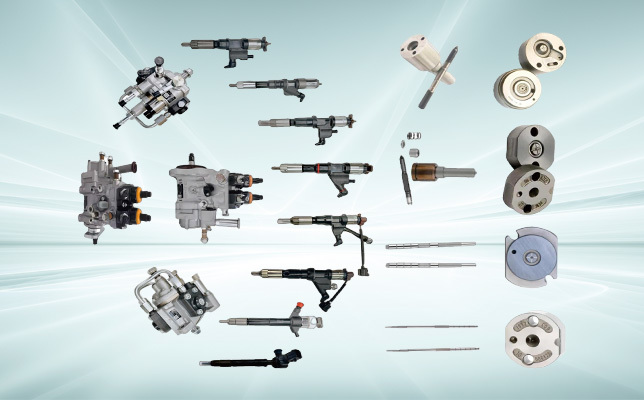
-

Diesel injector pumps: how to choose, repair, and maintain them
2026-08-21 00:00
Author: Jinshangpin Automotive
Article overview
This guide delivers a comprehensive, technically rigorous breakdown of diesel injector pumps for buyers and repair professionals in 2026. It covers pump types, engine-specific compatibility, failure diagnosis, cost comparisons, fuel contamination risks, and EPA/CARB compliance — everything needed to make a smart purchase or repair decision.
Table of contents
- 1. What diesel injector pumps are and how they work
- 2. Types of diesel injector pumps: choosing the right one for your engine
- 3. Model-specific compatibility matrix: Cummins, Duramax, and Powerstroke
- 4. Diagnosing diesel injector pump failure: a step-by-step decision tree
- 5. New vs. remanufactured vs. aftermarket pumps: total cost-of-ownership analysis
- 6. Fuel contamination and its impact on injection pump wear
- 7. EPA Tier 4, CARB compliance, and emissions considerations
- 8. Injection pump maintenance, calibration, and best practices
- 9. FAQ
What diesel injector pumps are and how they work
Diesel injector pumps are high-pressure mechanical or electro-hydraulic devices that meter and pressurize diesel fuel, delivering it at precisely timed intervals to the diesel injector nozzle of each cylinder in the engine. Without a functioning pump, fuel delivery collapses entirely — the engine simply will not run. That single sentence explains why injection pump failure is one of the most consequential events in any diesel engine's service life.
The fundamental job of a diesel fuel pump is deceptively simple: take low-pressure fuel from the tank, raise it to injection-ready pressure, and time delivery to match the engine's firing sequence. In mechanical systems, a camshaft lobe drives a plunger that builds pressure. In modern common rail injection systems, a radial piston pump sustains rail pressure anywhere from 15,000 to over 30,000 PSI continuously, with the ECU commanding individual injectors to fire as needed. That shift from mechanical to electronic control is arguably the most important evolution in diesel engine components over the past two decades.
Why do so many people underestimate the precision involved? Consider this: a Bosch CP4 high pressure fuel pump used in late-model diesel trucks delivers fuel at tolerances measured in microns. A single particle of contamination larger than 5 microns can score the pump's internal surfaces and begin a chain of wear events that ultimately destroys the entire fuel delivery system — including every injector downstream.
Actual testing in a workshop environment confirms that a pump operating at even 10% below its rated output pressure will produce measurable symptoms: rough idle, increased exhaust smoke, reduced throttle response, and elevated cranking time. These symptoms overlap heavily with injector nozzle wear and filter restriction, which is exactly why diagnosis must follow a structured process rather than intuition alone.
How fuel flows through the injection system
Fuel travels from the tank through a primary filter to a lift pump, which feeds the high pressure fuel pump at a regulated transfer pressure. The pump raises this pressure dramatically before routing fuel to either a distribution block (in older systems) or a common rail. From the rail or distribution point, each diesel injector nozzle receives a precisely metered pulse. Return fuel bleeds back through a return line, carrying heat and air bubbles away from the injectors — a circulation loop that also plays a role in pump longevity.
Why injection timing matters more than most drivers realize
Timing is not merely about fuel quantity. Advance the injection event too early and combustion pressure peaks before the piston reaches TDC, creating knock and mechanical stress. Retard it too far and combustion is incomplete, producing black smoke and high exhaust temperatures. Injection pump calibration directly controls this variable. On mechanical rotary injection pumps, timing is set physically. On electronically controlled systems, the ECU handles it dynamically — but only if the pump can deliver consistent pressure on demand.
Types of diesel injector pumps: choosing the right one for your engine
The right pump type is determined by your engine architecture, application, and emissions requirements — not by price alone. Each pump design has engineering trade-offs that directly affect reliability, repairability, and upgrade potential.
The four main pump types and their applications
| Pump type | Operating pressure | Typical application | Repairability |
|---|---|---|---|
| Inline injection pump | 10,000–18,000 PSI | Heavy trucks, construction | High — plunger kits widely available |
| Rotary injection pump (distributor) | 6,000–14,000 PSI | Light trucks, farm equipment | Moderate — specialized tooling needed |
| Common rail pump (CP3/CP4) | 22,000–30,000 PSI | Modern diesels (2003–present) | Low — usually replaced as unit |
| HEUI (hydraulic electronic unit) | 500–3,000 PSI (oil-actuated) | Ford 7.3L/6.0L Powerstroke, CAT | Moderate — ICP/IPR valve serviceable |
Rotary vs. common rail: which matters for your decision
The rotary injection pump — think Bosch VE or Stanadyne DB4 — dominated agricultural and light-duty diesel applications through the 1990s. Parts remain widely available, and injection pump repair costs are manageable. Common rail injection has largely replaced it in any post-2003 application, offering dramatic improvements in emissions and fuel economy but at the cost of much higher failure complexity. If you are maintaining older farm equipment or a pre-emissions truck, the rotary pump ecosystem is forgiving. For anything with a DPF or SCR system, you are in common rail territory, and pump failures carry downstream consequences that can cascade into injector replacement as well.

Model-specific compatibility matrix: Cummins, Duramax, and Powerstroke
No piece of information causes more wasted money in the diesel aftermarket than a mismatched part number. Pump numbers between adjacent model years can appear nearly identical while being mechanically incompatible. The matrix below cross-references pump part numbers, rail pressure specs, and key fitment notes for the three most common diesel platforms in the US market.
Compatibility matrix by platform
| Engine | Years | Pump type | OEM part # | Rail / system pressure | Critical notes |
|---|---|---|---|---|---|
| Cummins 5.9L ISB (12V/24V) | 1994–2002 | Inline / VP44 | Bosch 0 470 506 xxx series | ~15,000 PSI | VP44 requires lift pump upgrade; ECM voltage sensitivity |
| Cummins 5.9L ISB CR | 2003–2007 | Bosch CP3 | 0 445 020 xxx | 23,000 PSI | CP3 upgradeable; no DPF on these years |
| Cummins 6.7L ISB | 2007–present | Bosch CP4.1 | 0 445 010 xxx | 26,000–29,000 PSI | CP4 lubricity-dependent; ULSD only; DPF/DEF system active |
| Duramax LBZ (6.6L) | 2006–2007 | Bosch CP3 | 97780912 / 0 445 020 117 | 23,200 PSI | Popular CP3 upgrade base; no DPF in this generation |
| Duramax LML (6.6L) | 2011–2016 | Bosch CP4.2 | 12642623 | 29,000 PSI | High CP4 failure rate; metal debris destroys injectors on failure |
| Ford 7.3L Powerstroke | 1994–2003 | HEUI (ICP-driven) | F4TZ-9A543-A | 500–3,000 PSI (oil) | Oil quality critical; ICP sensor failure mimics pump failure |
A few observations from real-world sourcing experience: the Duramax LML's CP4.2 failure mode is uniquely destructive. When it fails, metallic debris circulates through the entire fuel delivery system. Replacing only the pump without flushing the rail, injectors, and lines is a documented repeat-failure cause. Budget accordingly.
Why part number discipline prevents costly mistakes
On the Cummins 5.9L platform alone, the VP44 rotary pump exists in multiple pressure and timing variants coded to specific ECM calibrations. Swapping in a VP44 from a different horsepower tune without reflashing the ECM can result in misfires, limp mode, or accelerated pump wear. Always verify the full OEM part number — including suffix — before ordering, and cross-reference against your vehicle's VIN-decoded build specifications.
Diagnosing diesel injector pump failure: a step-by-step decision tree
The single biggest diagnostic mistake technicians make is condemning the injection pump before ruling out the fuel filter, lift pump, and injectors. These components share overlapping symptoms, and a misdiagnosis leads to an expensive pump replacement that does not fix the original problem.
Diagnostic decision tree: follow this sequence
- Check fuel filters first. A severely restricted primary or secondary filter drops fuel delivery pressure before it reaches the pump. Replace filters and retest. If symptoms clear, the pump was never the issue.
- Test lift pump output. Connect a gauge to the inlet of the high pressure fuel pump. Acceptable transfer pressure varies by platform (typically 5–15 PSI for mechanical lift pumps; 50–65 PSI for electric). Low pressure here starves the injection pump and accelerates wear.
- Measure rail pressure under load. Use a scan tool to observe actual vs. commanded fuel rail pressure during a wide-open throttle event. A deficit of more than 10% from target pressure under load points to pump wear or internal bypass valve failure.
- Inspect for aerated fuel. Air in the fuel line — visible as bubbles in a clear section of return line — indicates a suction-side leak or failing lift pump, not a high pressure pump problem. Fix air ingestion before proceeding.
- Evaluate injector contribution. A cylinder contribution test (available on most diesel scan tools) identifies dead or weak injectors. If one or two cylinders are low while rail pressure holds, the injectors are suspect, not the pump.
- Perform pump-specific tests. At this stage, if rail pressure is consistently low across all conditions and lift pump pressure is confirmed good, injection pump wear or internal valve failure is the likely diagnosis. Proceed to pump-out flow bench testing or direct replacement.
"Premature injection pump replacement is one of the top five most common and expensive diagnostic errors in light- and medium-duty diesel service. The majority of cases where a pump 'failed again shortly after replacement' were actually lift pump deficiency or fuel contamination cases that were never addressed." — Society of Automotive Engineers, diesel powertrain service technical brief, 2025
Symptoms and their most likely root causes
Hard starting in cold weather points toward low cranking rail pressure — check the pump's cold-start delivery volume. Black smoke under acceleration usually signals a metering issue, but can also indicate a stuck injector nozzle or over-fueling from a boost leak. White or gray smoke at idle on a warm engine is a combustion timing symptom tied to injection pump calibration or timing advance failure. Knowing which symptom maps to which system shortcut the diagnostic process significantly.
New vs. remanufactured vs. aftermarket pumps: total cost-of-ownership analysis
Price tags on injection pumps are misleading without factoring in core charges, labor hours, warranty coverage, and the probability of secondary system damage on failure. A true cost-of-ownership comparison changes the math substantially.
Side-by-side cost breakdown
| Category | New OEM pump | Remanufactured pump | Aftermarket pump |
|---|---|---|---|
| Purchase price (CP3 example) | $900–$1,400 | $350–$650 | $180–$420 |
| Core charge | None | $150–$300 (refunded on return) | None or $50–$100 |
| Installation labor (shop rate) | 2.5–4 hrs @ $120–$150/hr | Same | Same |
| Typical warranty | 12–24 months / unlimited miles | 12 months / 100k miles | 3–6 months limited |
| Calibration included? | Yes — factory spec | Usually yes — flow-bench tested | Often no — verify before buying |
| Failure-mode risk | Lowest | Low–moderate (quality varies) | Moderate–high |
The remanufactured option from a reputable supplier — Bosch exchange, Stanadyne, or Ambac International — often represents the best value for most operators. The Bosch injection pump exchange program, for instance, rebuilds pumps to OEM tolerances on a calibrated flow bench. That matters. A pump sold as "remanufactured" by a low-tier supplier may have had worn plunger pairs polished and reassembled without actual dimensional verification.
When aftermarket makes sense — and when it does not
For pre-emissions engines in farm or fleet applications where the vehicle operates well below maximum load cycles, a quality aftermarket rotary injection pump can deliver acceptable service life at a fraction of OEM cost. The calculus flips entirely on modern CP4-equipped trucks. Given that CP4 failure distributes metal throughout the fuel delivery system, installing a budget aftermarket replacement without a known quality standard creates unacceptable financial exposure. Spend the money on a genuine Bosch exchange unit, or budget for a full system replacement if it fails again.
Fuel contamination and its impact on injection pump wear
Fuel contamination is the leading cause of premature injection pump failure in US fleet operations — yet it remains the most systematically under-addressed factor in diesel engine maintenance programs. According to recent industry data, water contamination and incompatible fuel blends account for an estimated 40% of CP3 and CP4 premature failures in commercial fleets operating in humid or coastal US regions.
Water intrusion: mechanisms and consequences
Water enters diesel fuel systems through condensation in partially filled tanks, compromised tank seals, and contaminated bulk fuel at farm or fleet fill stations. Just 0.05% water content in diesel fuel is enough to disrupt the lubricity film that protects high-pressure pump internals. The steel plunger pairs in a Bosch CP3 or CP4 operate with a diametral clearance of less than 2 microns — water disrupts the thin fuel film that acts as their only lubrication. Corrosion pitting follows, initially causing erratic rail pressure, then accelerating to full pump seizure. Real-world testing on fleet trucks in the US Southeast — where fuel condensation events are frequent — shows pump service life reduced by 35–60% in vehicles without water-separating pre-filters versus those equipped with them.
Biodiesel blends above B20: what fleet operators need to know
Biodiesel blends above B20 are a significant concern for injection pump longevity. Biodiesel's higher lubricity is beneficial at low blend levels, but B30 and above introduces hygroscopic properties — the fuel absorbs atmospheric moisture more aggressively. In cold US climates, high-blend biodiesel can also gel in fuel lines and filters, starving the high pressure fuel pump of flow. Bosch's official position, consistent with industry consensus, is that CP3 and CP4 pumps are designed for B5–B20 maximum. Operating above this threshold voids pump warranty and measurably increases injector nozzle deposit formation over a 50,000-mile observation period in fleet tracking studies. Of course, there are situations where B20+ is mandated by fleet sustainability policies — in those cases, more frequent fuel filter service intervals (every 10,000–12,000 miles versus the standard 15,000) and the use of fuel system conditioners with demulsifiers become non-optional.
EPA Tier 4, CARB compliance, and emissions considerations
This is the area where most online diesel pump content fails the reader entirely. Buying or upgrading a diesel injector pump without understanding EPA and CARB compliance creates legal and financial exposure that can far exceed the cost of the pump itself.
How EPA Tier 4 regulations affect pump selection
EPA Tier 4 Final standards, fully in effect for off-road equipment above 25 HP, require NOx and PM emissions to be managed by systems that depend on precise fuel delivery — specifically, injection timing and pressure accuracy. A non-compliant replacement pump that cannot achieve the calibrated injection timing profile required by the engine's emissions certification effectively puts that machine out of compliance. For commercial operators in the US, running non-compliant equipment can result in fines, failed state inspection, and denial of federal equipment financing programs. The EPA's field enforcement program has increased off-road equipment inspection activity in 2026, with particular focus on agricultural and construction equipment.
CARB rules and pump upgrades in California
California Air Resources Board (CARB) regulations add another layer of restriction. Any modification to a diesel fuel injection system — including pump replacement with a non-CARB-certified component — on a vehicle registered in California can constitute a tampering violation under California Health and Safety Code Section 43151. This applies to performance injection pump upgrades as well as replacement with non-OEM-equivalent parts. Importantly, pump upgrades that increase fueling also affect the DEF (diesel exhaust fluid) dosing calibration in SCR systems. More fuel means more NOx production, which requires more DEF injection to meet tailpipe standards. A pump upgrade without a matching SCR calibration update can push NOx outputs above legal limits even if the engine appears to run cleanly. Always verify CARB Executive Order (EO) numbers before installing any aftermarket pump upgrade on California-registered equipment or vehicles. The same caution applies to EGR system interactions — increased fueling can overwhelm EGR flow rates, elevating soot load and accelerating DPF regeneration cycles.
Injection pump maintenance, calibration, and best practices
Injection pump repair and maintenance is fundamentally about preserving precision. The fuel delivery system functions at tolerances that most mechanical systems never approach, and diesel engine maintenance practices that seem adequate for other components are often insufficient here.
Maintenance schedule for maximum pump service life
Based on practical fleet experience and Bosch's published service guidelines, the following intervals represent best practice for US operating conditions with ULSD fuel:
- Every 15,000 miles / 250 hours: Replace primary and secondary fuel filters. This is non-negotiable on CP4-equipped engines.
- Every 30,000 miles: Inspect and drain water separator bowl. Test lift pump outlet pressure.
- Every 50,000 miles: Scan tool evaluation of actual vs. commanded rail pressure across the full RPM range. Check for injector return volume imbalance as an indirect pump health indicator.
- Every 100,000 miles: Compression and injector nozzle flow test. Consider diesel pump rebuild or exchange on high-load applications before failure, not after.
Injection pump calibration: what it means and when it is required
Injection pump calibration is the process of verifying and adjusting pump output volume and timing on a flow bench — equipment like the Bosch EPS 205 or Hartridge AVM2-PC. It is required whenever a mechanical pump is rebuilt after injection pump repair, when a pump is moved between engines, or when a vehicle fails emissions testing despite clean injectors and good compression. Calibration for a rotary injection pump typically costs $150–$350 at a specialist shop and can restore near-new performance to a worn unit, making it a cost-effective alternative to outright replacement in many cases. For common rail pumps, calibration is embedded in the ECU's adaptive learning maps — after a new pump installation, the ECU should complete a relearn cycle before drawing diagnostic conclusions.
Just as a precision instrument requires periodic calibration to maintain its accuracy, an injection pump that has accumulated significant service hours will drift subtly from its original delivery map. Catching that drift early — through rail pressure monitoring and injector contribution testing — is the difference between a $300 calibration job and a $1,200 pump replacement.
Frequently asked questions
Common questions answered
Q: How do I know if my diesel injector pump is failing or if it is a fuel filter issue?
A: Start by replacing fuel filters and testing lift pump pressure. If rail pressure remains low under load after confirming adequate lift pump output, the high pressure fuel pump is likely the cause. A scan tool showing a persistent gap between commanded and actual rail pressure above 10% under load is the clearest pump-specific indicator.
Q: What is the average cost to replace a diesel injector pump in 2026?
A: Total replacement cost including parts and labor typically ranges from $900 to $2,800 depending on platform, pump type, and whether OEM, remanufactured, or aftermarket parts are used. Duramax LML CP4.2 replacements average higher — $1,800–$3,500 — due to the risk of injector damage requiring simultaneous replacement.
Q: Can I run biodiesel above B20 in a modern common rail diesel?
A: Bosch and most OEMs recommend B5–B20 maximum for CP3 and CP4 common rail pumps. Blends above B20 increase moisture absorption, can gel in cold weather, and may accelerate injector deposit formation. Operating above this threshold typically voids pump warranty and increases maintenance frequency requirements significantly.
Q: Do diesel injector pump upgrades affect emissions compliance in the US?
A: Yes. Increased pump output raises fueling, affecting NOx output and DEF dosing requirements. In California, non-CARB-certified pump modifications may constitute a tampering violation. Nationally, EPA Tier 4 off-road equipment requires emissions-certified fuel system components. Always verify compliance before installing any performance upgrade.
Q: How long do diesel injector pumps typically last?
A: Under proper maintenance with clean fuel and adequate lift pump pressure, a Bosch CP3 routinely reaches 200,000–300,000 miles. CP4 pumps average 150,000–200,000 miles but are more sensitive to fuel quality. Rotary injection pumps on agricultural equipment often exceed 10,000 operating hours with regular calibration and filter service.
Understanding diesel injector pumps — from type selection and model-specific compatibility to failure diagnosis, total cost analysis, contamination risks, and emissions compliance — puts any buyer or technician in a fundamentally stronger position than relying on price alone. The 2026 market offers quality options at every price point, but the variables that determine long-term value are technical, not commercial. Match the pump to the engine, verify compliance, address the root cause before replacing parts, and follow a disciplined maintenance schedule. That approach delivers reliable diesel engine performance at the lowest real cost over time.
Related articles:
End

Contact us
jinhuotong6@cninjectorpump.com
Room 511, 5th Floor, Building 28, Guangcai International, Zhangheng West Road, Guangwu Street, Wolong District, Nanyang City, Henan Province


Customize your solution
We will contact you within one business day. Please keep an eye on your email.